

Monday, September 12, 2011
The Devil's Delusion - Interview with David Berlinski on Uncommon Knowledge


Sunday, September 11, 2011
God Is Here and hasn't lost His Voice

Three basic arguments for God's existence
When we approach the subject of arguing for the existence of God, we tread on familiar, hallowed ground. It was the Apostle Peter who said, "But in your hearts set apart Christ as Lord. Always be prepared to give an answer to everyone who asks you to give the reason for the hope that you have. But do this with gentleness and respect(1Pet 3:15)." It is the responsibility of every believer to at least be familiar with a few good arguments for the existence of God. You don't need to be a professor or a paid teacher or pastor to be able to give that answer of the hope within you. And it does help to remember the last part of that verse I mentioned before, the part about being gentle and respectful. I am guilty in the past of winning an argument against someone instead of helping them with the answer to their needs. So with this in mind, let's look at the three classic arguments for God's existence.
The Cosmological Argument
The first one is called the Cosmological argument, and it goes like this: The universe had a beginning, and therefore the universe must have had a Beginner. This one has had a lot of help in the last few years from the scientific community, particularly those who have studied the red shift effect in the cosmos, and the studies of the discovery of the Big Bang theory. Both of these point to a singularity that started off all of the things we call the universe. But of course, it is really a logical argument more than a scientific finding. But, if you look into the creation with this view in mind, you will find that the creation itself points to a single point of origin, which implies a single Originator, which is the Supernatural Power behind the universe.
The Teleological Argument
The second classic argument for the existence of God is really pretentiously called the Teleological argument. This word comes from the Greek word telos, which just means design. This is the argument that holds that the apparent design of the universe points to a Designer. The first letter of Paul in the Bible, the book of Romans, says, " For since the creation of the world His invisible attributes are clearly seen, being understood by the things that are made, even His eternal power and Godhead.(Romans 1:20) If you were lost in the desert and suddenly found a perfectly good, working GPS unit sitting in the sand, you would not conclude that it sprang up from the rocks and cactus, rather you would look at the immense complexity of an instrument like a GPS device and conclude that a person had made this, and then be really thankful that you had found it. It is the same with the Creation itself. With all of the beauty and such awesome intricacy and detail there must a great Designer, an intelligent being behind it all.
The Moral Argument
The final classic argument for the existence of God we are going to look at is called the Moral Argument. I briefly presented this argument in the section on worldview and truth. The Moral Argument states that every moral law has a moral law giver, and therefore every absolute law must have an Absolute Law Giver. This stance holds that behind the absolute, non-material realities and principles and laws of the universe, there is One that, in His own being encompasses Truth, with a capital "T."
It's Called Apologetics
The subject of defending the beliefs of the Christian world and life view is a subset of theology called apologetics. It is a huge subject matter, with many different belief systems within itself. I recommend taking a class or reading some material in apologetics as a worthy goal for the furtherance of your own mind and heart and life of faith. I also feel that there is a reason that Peter says to us to defend our faith with gentleness and respect. The danger of being an expert in apologetics is that you would forget the real reason for your intense pursuit of study and knowledge, which is that you be established in your own understanding and that you may help others be encouraged at whatever level or place of faith or understanding they may be in at the time.
These above arguments are positive arguments, because they affirmatively argue for the existence of a Supreme Being. Another often used approach is to affirmatively argue and then negatively argue against the particular view you are dealing with. Often in the negative argumentative approach you will deal in the area called presuppositions. We mentioned this also briefly in the section on worldviews. People are often blinded by or controlled by things they believe to be true which in fact are not so. Intellectual factors, cultural conditioning, and just plain old spiritual blindness are some of the factors that are major parts of this activity of uncovering false presuppositions.
Humility and the cumulative case
I can't say enough about the need to be loving and humble when telling people about the failure of their long held beliefs, and the possibilities of a life lived in God's power, presence, favor and love. And just in case you would be tempted to be harsh with people, remember that first of all God was really, really patient with you, and that God is the one that promises to convince "the world of sin, and of righteousness, and of judgment(John 16:8)." So it is God's job to do the convicting and convincing work, and not ours. You can be sure that God is always working. In John 5:17 Jesus says “My Father has been working until now, and I have been working.” He is always reaching out to people who need to hear from Him clearly.
Most people have a unique path to God, and you have intersected with them on that path for a reason. It usually takes a few witnesses on the stand before the case is completely closed. You and I are only called to be witnesses in the case, and not the lawyer. God will do the convincing work. It is also important to know that the cumulative case will work much better than just one good argument. Be available to those seeking the truth and when you don't have an answer to their particular question, don't feel like you've failed somehow. Just offer to help them find the answer with them, and then follow through on your promise. Your interest in them and care for them will do just as much as any information you may help them find.
Monday, September 5, 2011
Rick Perry Scares the Media & Democrats to Death - Jack Kelly

GOP consultant Doug MacKinnon says that the editor of a major newspaper told him, "We plan to declare war on Rick Perry and do all in our power to crush him."
Mr. MacKinnon was outraged. "No pretense of integrity, professionalism or of unbiased news gathering," he wrote in Investors' Business Daily.
But I doubt he was surprised. This is what the "mainstream" media did to Sarah Palin in 2008, and what likely is in store for anyone Republicans nominate.
But liberals will go after the Texas governor with special venom because he is anti- intellectual, prays in public, takes the Constitution seriously and sometimes carries a handgun,Walter Shapiro wrote in The New Republic.
"It's almost as if Perry's political persona was constructed by bundling together all the fears and phantoms in the left-wing anxiety closet." he said.
Some East Coast Republicans share these concerns. Mr. Perry's "primary flaw appears to be a chesty, quick-draw machismo that might be all right for an angry base but wrong for an antsy country," wrote Peggy Noonan in The Wall Street Journal.
"He does very well with the alternative reality right," snarked David Brooks, the "conservative" columnist for The New York Times.
They were peeved with Gov. Perry for saying it would be "almost treasonous" for Federal Reserve Board Chairman Ben Bernanke to create more money out of thin air.
Ms. Noonan has said of President Barack Obama that "he rose with guts and gifts." Mr. Brooks has praised his "superior temperament" and his "perfectly creased pant." Because of their girlish crushes on the president, they are regarded by few conservatives as good judges of character.
But Commentary editor John Podhoretz, who is made of sterner stuff, also said "suggesting that Mr. Bernanke's easy money policy was tantamount to treason is the opposite of handling an issue soberly. It's hyperbolic blatherskite."
Maybe. But if liberal New York Times columnist Paul Krugman is right (which is about as often as a stopped clock has the correct time), this "blatherskite" performed a valuable service. The Fed chairman foreswore a third round of "quantitative easing" because Gov. Perry intimidated him, Mr. Krugman wrote.
Mr. Perry's hyperbole was deliberate, thinks a former communications director for the Texas GOP.
"While what Perry said struck some as over the top, it focused all the GOP primary attention on him and pulled the media into covering him, immediately," Bryan Preston said.
Liberals often say Republicans are stupid, but they really believe it with regard to Gov. Perry. For liberals, credentials and holding fashionable opinions are more important markers of intelligence than knowledge or accomplishment.
"Liberals revere high SAT scores," Mr. Shapiro wrote.
Gov. Perry scorns their opinions, and he went to Texas A&M, not Harvard or Yale. So when a new book said his is "the brainiest political operation in America," liberals were shocked.
"No candidate has ever presided over a political operation so skeptical of basic campaign tools and so committed to using social-science methods to rigorously test them," former Boston Globe reporter Sasha Issenberg told The New York Times.
Washington political consultants cost too much and deliver too little, Mr. Perry thinks. That's why some establishment Republicans oppose him, Mr. MacKinnon said. "For a few in the GOP consultant class, they'll gladly see Perry lose in November just to ensure they are not shut out of a Republican White House."
Sarah Palin in 2008 was unprepared for the viciousness of the media onslaught, and stumbled in her interview with Katie Couric (though not so badly as the way CBS edited the interview made it seem.)
Ms. Palin was a virtual unknown when John McCain selected her as his running mate, so she was easy to smear. Mr. Perry's been governor of the second-largest state for more than a decade, so liberals can't credibly say he's unprepared. And I doubt the president's supporters want to call attention to how his record of job creation compares to Mr. Perry's.
So expect lots of name calling. That may not work either. The "Texas cowboy" frightens Eastern liberals, but other Americans may find Gov. Perry's decisiveness a refreshing change from the wimp in the White House who's been described -- cruelly but accurately -- by New Hampshire's Manchester Union Leader as "the Last Responder."
Page Printed from: http://www.realclearpolitics.com/articles/2011/09/05/media_dems_fear_perry_so_they_smear_him_111206.html at September 05, 2011 - 07:05:55 PM PDT
Mr. MacKinnon was outraged. "No pretense of integrity, professionalism or of unbiased news gathering," he wrote in Investors' Business Daily.
But liberals will go after the Texas governor with special venom because he is anti- intellectual, prays in public, takes the Constitution seriously and sometimes carries a handgun,Walter Shapiro wrote in The New Republic.
"It's almost as if Perry's political persona was constructed by bundling together all the fears and phantoms in the left-wing anxiety closet." he said.
Some East Coast Republicans share these concerns. Mr. Perry's "primary flaw appears to be a chesty, quick-draw machismo that might be all right for an angry base but wrong for an antsy country," wrote Peggy Noonan in The Wall Street Journal.
"He does very well with the alternative reality right," snarked David Brooks, the "conservative" columnist for The New York Times.
They were peeved with Gov. Perry for saying it would be "almost treasonous" for Federal Reserve Board Chairman Ben Bernanke to create more money out of thin air.
Ms. Noonan has said of President Barack Obama that "he rose with guts and gifts." Mr. Brooks has praised his "superior temperament" and his "perfectly creased pant." Because of their girlish crushes on the president, they are regarded by few conservatives as good judges of character.
But Commentary editor John Podhoretz, who is made of sterner stuff, also said "suggesting that Mr. Bernanke's easy money policy was tantamount to treason is the opposite of handling an issue soberly. It's hyperbolic blatherskite."
Maybe. But if liberal New York Times columnist Paul Krugman is right (which is about as often as a stopped clock has the correct time), this "blatherskite" performed a valuable service. The Fed chairman foreswore a third round of "quantitative easing" because Gov. Perry intimidated him, Mr. Krugman wrote.
Mr. Perry's hyperbole was deliberate, thinks a former communications director for the Texas GOP.
"While what Perry said struck some as over the top, it focused all the GOP primary attention on him and pulled the media into covering him, immediately," Bryan Preston said.
Liberals often say Republicans are stupid, but they really believe it with regard to Gov. Perry. For liberals, credentials and holding fashionable opinions are more important markers of intelligence than knowledge or accomplishment.
"Liberals revere high SAT scores," Mr. Shapiro wrote.
Gov. Perry scorns their opinions, and he went to Texas A&M, not Harvard or Yale. So when a new book said his is "the brainiest political operation in America," liberals were shocked.
"No candidate has ever presided over a political operation so skeptical of basic campaign tools and so committed to using social-science methods to rigorously test them," former Boston Globe reporter Sasha Issenberg told The New York Times.
Washington political consultants cost too much and deliver too little, Mr. Perry thinks. That's why some establishment Republicans oppose him, Mr. MacKinnon said. "For a few in the GOP consultant class, they'll gladly see Perry lose in November just to ensure they are not shut out of a Republican White House."
Sarah Palin in 2008 was unprepared for the viciousness of the media onslaught, and stumbled in her interview with Katie Couric (though not so badly as the way CBS edited the interview made it seem.)
Ms. Palin was a virtual unknown when John McCain selected her as his running mate, so she was easy to smear. Mr. Perry's been governor of the second-largest state for more than a decade, so liberals can't credibly say he's unprepared. And I doubt the president's supporters want to call attention to how his record of job creation compares to Mr. Perry's.
So expect lots of name calling. That may not work either. The "Texas cowboy" frightens Eastern liberals, but other Americans may find Gov. Perry's decisiveness a refreshing change from the wimp in the White House who's been described -- cruelly but accurately -- by New Hampshire's Manchester Union Leader as "the Last Responder."
Friday, September 2, 2011


God's attributes and acts prove that He can be trusted #5 - God Is A Redeemer

God is a Redeemer
When I was a kid I would hunt around my neighborhood for bottles and then take them to my local market. I remember it was called the "Bissonet Superette," on Bissonet street in Houston, Texas. I would take my bottles and get money for them and then buy a nice, cold Dr. Pepper to enjoy on those hot, humid, dog days of the Texas summers. My goal was to enjoy a cool drink, but I was also learning about a very important thing about the nature of what it is to redeem something. These bottles were cast away, having served their purpose for the original buyer.
God redeems a lot of things, mostly people's lives. He leads them from darkness to light and takes the life that was deliberately wasted and causes all of the mess of it to be reversed and changed into something new. A bad habit that is changed into a virtue, an addiction transformed into grace and new life, a family, tribe, or even a nation changed by the influence of love and righteousness and justice; these are the works of a Redeeming God.
Just as I was searching out to find bottles to slake my thirst for Dr. Pepper and a reprieve from the Texas heat, God is searching for lives to redeem. He wants to buy us back from whatever ditch or side street we've been thrown into, and bring us back into alignment with God, ourselves, and others. Psalm 23, that song about God being a Shepherd and watching over us to lead us to green pastures and beside still waters is a great picture and metaphor for God's actions as a Redeemer. Many over the centuries have been quieted and comforted by the words of this most famous and familiar psalm of David. Jesus used this familiar word picture to name Himself and to describe His unique work on planet Earth, by saying " I am the Good Shepherd." And just as I was the "Shepherd of the Bottles", redeeming and buying them back and giving them new life and purpose, God is in this business as well. His buyback plan is still in effect, and paying off for anyone who wants to participate in the program. He will take your messed up, mussed up, mucked up life in exchange for the perfect life of the Son of God. The Message version, a translation of the Bible in modern language by author Eugene Peterson translates the familiar passage John 3:16 this way: "This is how much God loved the world: He gave his Son, his one and only Son. And this is why: so that no one need be destroyed; by believing in him, anyone can have a whole and lasting life. God didn't go to all the trouble of sending his Son merely to point an accusing finger, telling the world how bad it was. He came to help, to put the world right again." That's what it means to redeem, to put things right again.
25 Books Every Christian Should Read - by Renovare
1. On the Incarnation by St. Athanasius
2. Confessions by St. Augustine
3. The Sayings of the Desert Fathers
4. The Rule of St. Benedict by St. Benedict
5. The Divine Comedy by Dante Alighieri
6. The Cloud of Unknowing by Anonymous
7. Revelations of Divine Love (Showings) by Julian of Norwich
8. The Imitation of Christ by Thomas à Kempis
9. The Philokalia
10. Institutes of the Christian Religion by John Calvin
11. The Interior Castle by St. Teresa of Avila
12. Dark Night of the Soul by St. John of the Cross
13. Pensées by Blaise Pascal
14. The Pilgrim's Progress by John Bunyan
15. The Practice of the Presence of God by Brother Lawrence
16. A Serious Call to a Devout and Holy Life by William Law
17. The Way of a Pilgrim by Unknown Author
18. The Brothers Karamazov by Fyodor Dostoevsky
19. Orthodoxy by G. K. Chesterton
20. The Poetry of Gerard Manley Hopkins
21. The Cost of Discipleship by Dietrich Bonhoeffer
22. A Testament of Devotion by Thomas R. Kelly
23. The Seven Storey Mountain by Thomas Merton
24. Mere Christianity by C. S. Lewis
25. The Return of the Prodigal Son by Henri J. M. Nouwen
Many of these books are available for free on the web!
via: Renovare
Kingdom Quotes: Oswald Chambers - God's Purpose

Our Lord's teaching is always anti-self-realization.
His purpose is not the development of a man;
His purpose is to make a man exactly like Himself,
and the characteristic of the Son of God is self-expenditure.
If we believe in Jesus, it is not what we gain,
but what He pours through us that counts.
It is not that God makes us beautifully rounded grapes,
but that He squeezes the sweetness out of us.
Spiritually, we cannot measure our life by success,
but only by what God pours through us,
and we cannot measure that at all.
Oswald Chambers
Thursday, September 1, 2011
Wednesday, August 31, 2011
The Ominous Handwriting on America’s Wall - J. Lee Grady

An earthquake rattles Washington, D.C., and a fierce storm ravages the East Coast. Is God speaking to us?
I’m not a doomsday prophet, and I don’t believe every hurricane, earthquake or drought is God’s judgment. But I did pause to ponder the significance of the freakish 5.8-magnitude quake that jolted the East Coast last week. The White House was evacuated, the Washington Monument was closed indefinitely because of cracks, and the National Cathedral’s central tower was seriously damaged.
Does anybody else find that slightly spooky?
“I hope President Obama and the leaders of both political parties in Washington are heeding the ominous signs of the times. And I pray they don’t forget the words of another one of our founders, Patrick Henry, who said: 'It is when people forget God that tyrants forge their chains.'”
Atheists and secularists will say it was just a big seismic coincidence. They probably also ignored the fact that a few days after the quake, a massive storm weirdly drifted toward Washington, D.C., and New York City. Hurricane Irene has now been blamed for at least 42 deaths in 12 states, and more than 2.5 million people from North Carolina to Maine were still without electricity Tuesday.
Judgment from God? That’s not how I view disasters. But I do think last week’s double whammy was about as obvious a sign from heaven as when God scribbled a warning on the wall while King Belshazzar was partying in his palace.
Hello? Is anybody reading the handwriting on America’s wall?
In the case of Belshazzar (see Daniel 5:1-31), that clueless king couldn’t decipher God’s cryptic graffiti—so he called a true prophet to decode it. I’m not sure if many American leaders would ask a modern Daniel for counsel. Many of them have divorced themselves and our government from faith in God and His moral standards.
New York’s ultra-secularist mayor, Michael Bloomberg, was certainly in a Belshazzar mood when he announced last week that he was excluding any and all members of the clergy from the city’s commemoration of the 10th anniversary of 9/11. Pastors as well as politicians have blasted Bloomberg for his insensitivity, but he insists that the ceremony will be better without a spiritual tone.
I guess he thinks America doesn’t need God to help us through our worst national crisis in a generation. We can just read some humanistic poems and grieve by ourselves.
According to the joke posted on thousands of Facebook pages last week, the Virginia earthquake was triggered when America’s founding fathers rolled over in their graves. A funny thought, yes, but I don’t think George Washington or Benjamin Franklin would find anything amusing about the state of our country today. And I don’t think they’d be laughing at Mayor Bloomberg’s blatantly tyrannical stance against religion.
The idea of a 9/11 commemoration without prayer is downright sad, especially when you recall that our nation’s founders—as imperfect as they were—built this country on Christian precepts. In today’s secularist climate, people who speak about our founders’ faith are labeled right-wing whackos. Pardon my political incorrectness, but questioning whether many of the founders were Bible-believing Christians is as insulting as denying the Holocaust.
The founders did not hide their faith or apologize for it—and they certainly never legislated against it. Consider these facts (which, thankfully, have not been removed from history books):
- The first prayer in the U.S. Congress was offered in Philadelphia in 1774. George Washington was among those kneeling as other leaders gathered to pray after hearing that British forces had attacked Boston. One observer wrote that the scene “was enough to melt a heart of stone” as he watched tears gush from the eyes of the old patriots.
- During the Continental Congress of 1787, Benjamin Franklin asked that clergy be called in every morning to lead prayers “imploring the assistance of Heaven, and its blessing on our deliberations.”
- George Washington asked citizens in 1789 to “unite in most humbly offering our prayers and supplications to the great Lord and Ruler of Nations, and beseech him to pardon our national and other transgressions.”
- In 1799 President John Adams urged Americans to fast, pray and “call to mind our numerous offences against the most high God, confess them before Him with sincerest penitence” and “implore His pardoning mercy … for our past transgressions.”
Fast forward to the America of 2011, where faith is criticized, believers are mocked and leaders don’t see any need for prayer. It’s a pitiful way to end our legacy.
It will probably take more than a few cracked monuments or damaged cathedral towers to grab the attention of leaders like Mayor Bloomberg. Meanwhile, I hope President Obama and the leaders of both political parties in Washington are heeding the signs of the times. And I pray they don’t forget the words of another one of our founders, Patrick Henry, who said: “It is when people forget God that tyrants forge their chains.”
J. Lee Grady is contributing editor of Charisma. You can follow him on Twitter at leegrady. He will be ministering next week in Lima and Tarapoto, Peru.

Perry vs. Romney? Go with Perry - Deroy Murdock

Rick Perry has pole-vaulted over Willard Mitt Romney in the race to become the top Republican to face President Obama on Election Day 2012. Texas’s governor beat Massachusetts’s former governor 29 percent to 17 percent, Gallup reported Wednesday, in the second national survey to find Perry leading by double digits among Republicans. Perry deserves this distinction. While he lacks the pro-market purity of Milton Friedman, Perry’s record should satisfy limited-government conservatives far more than Romney’s.
• As “America’s jobs governor,” Perry is a one-man antidote to Obama’s venomous policies, which have held unemployment above 9 percent for 25 of the last 27 months. Across all 50 states, between June 2009 and June 2011, the Dallas Federal Reserve calculates that 49.9 percent of America’s net new jobs arose in Texas. July was its eleventh straight month of payroll expansion, with 29,300 Texans finding work. Nearly eleven years into Perry’s governorship, Texas inarguably is No. 1 in job growth.
During Romney’s single four-year term, however, the U.S. Labor Department ranked Massachusetts No. 47 in job growth. Employment increased just 0.9 percent between January 2003 and January 2007. At that time, U.S. job growth was roughly 5 percent, reports WSJ.com’s Brett Arends. Romney did keep Massachusetts ahead of Ohio and Michigan — two Rust Belt job sieves — and Louisiana, crushed by Katrina.

New Yorkers and Californians must be stampeding into Texas for something beyond triple-digit summer temperatures.
• The libertarian Cato Institute’s Report Card on America’s Governors gives Perry straight Bs and Romney consistent Cs.
Cato praised Perry for introducing “a zero-based budget to force the state agencies to justify their continued existence and funding levels” and noted that “he has presided over moderate increases in the Texas general fund budget.” Cato applauded Perry’s “substantial achievement”: a $6 billion property tax cut in 2004 — including a first-year, $1.5 billion net tax reduction. However, Cato criticized Perry for partially offsetting this tax relief with a $1-per-pack cigarette tax hike and a gross receipts tax on business.
Cato observed that Romney’s “first budget, presented under the cloud of a $2 billion deficit, balanced the budget with some spending cuts, but a $500 million increase in various fees was the largest component of the budget fix.” Cato also saw that Romney “proposed modest increases to the budget and line-item vetoed millions of dollars each year, only to have most of those vetoes overridden.” In October 2006, Cato’s Stephen Slivinski predicted Romney’s current migraine: “If you consider the massive costs to taxpayers that his universal health care plan will inflict once he’s left office, Romney’s tenure is clearly not a triumph of small-government activism.”
• On health care, the free-market Club for Growth (where I twice have spoken) lauds Perry for expanding managed care within Medicaid. Among other recent modernizations, a CFG White Paper on Perryexplains, “this bill could save Texas nearly $468 million over two years.” After Perry’s extensive lawsuit reforms, “the number of insurance companies offering medical malpractice insurance soared 650 percent,” along with a massive influx of doctors eager to perform diagnoses rather than depositions.
CFG credits Romney for requiring Medicaid patients to co-pay for some treatments and increasing new state workers’ health contributions from 15 percent to 25. But CFG also describes Romneycare as “one lab experiment that has completely failed.” Romneycare wields an individual mandate. Also, government-funded medicine has zoomed from $133 million in Fiscal Year 2007 to some $880 million in FY2010 — despite Romney’s promise that “the costs of health care will be reduced.”
Unlike Perry, who can slam the president on Obamacare to his face, Romney cannot do so without inviting an immediate and overwhelming smackdown from Obama. Imagine Romney in a fall 2012 debate against Obama. After criticizing the president’s signature accomplishment, Obama might say, “Mitt, considering what you did as governor, it’s strange to hear you speak so poorly about the health-reform plan that I signed. After all, the Wall Street Journal called Romneycare ‘the dress rehearsal for Obamacare.’” That line alone could do to Romney what Ronald Reagan did to 1984’s Democratic nominee, Walter Mondale, when he said in an autumn debate: “I will not make age an issue of this campaign. I am not going to exploit, for political purposes, my opponent’s youth and inexperience.”
• While CFG chides Perry for “well-intentioned, but misguided state-funded subsidy programs to attract corporations to Texas,” it praises him for opposing the ethanol program, possibly Washington’s grubbiest corporate-welfare scheme.
Romney, in turn, boldly told Iowa voters on May 27: “I support the subsidy of ethanol.”
• Perry describes so-called “global warming” as an unproven “scientific theory” and believes that “there are a substantial number of scientists who have manipulated data” on this issue.
“I believe the world is getting warmer, and I believe that humans have contributed to that,” Romney declared June 3. On Wednesday, he retreated: “I don’t know if it’s mostly caused by humans.”
“It is quite likely that Perry would seek to move the country in a much more pro-growth direction,” the Club for Growth concludes. “Almost any movement in the direction of the Texas approach would be welcomed.”
“We also think that Romney is somewhat of a technocrat,” CFG summarizes. “He has developed an unshakeable reputation as a flip-flopper. He has changed his position on several economic issues, including taxes, education, political free speech, and climate change. And yet the one issue that he doesn’t flip on — Romneycare — is the one that is causing him the most problems with conservative voters.”
Conservatives hungry for free — or at least freer — markets are stampeding toward Rick Perry. True, the cowboy-boot-wearing governor recalls Pres. G. W. Bush in style. Unfortunately, Willard Mitt Romney reflects him in substance.
— Deroy Murdock is a nationally syndicated columnist with the Scripps Howard News Service and a media fellow with the Hoover Institution on War, Revolution and Peace at Stanford University.
God's attributes and acts prove that He can be trusted # 4 - Common Grace
God is a Sustainer(common grace)
God is also the One that sustains all of us in every second of our lives, even those that do not know or acknowledge Him as God. The Apostle Paul put it this way, "For since the creation of the world His invisible attributes are clearly seen, being understood by the things that are made"(Romans 1:20). The writer of the book of Hebrews said that God "upholds all things by the word of His power"(Heb. 1:3). This upholding or sustaining is to be understood as a continuation of the creating of all Creation mentioned earlier, going on moment by moment by God's continually speaking. So here the Bible is saying that the event called Creation is really still going on, and not just an event in the distant past. Think of that! Microsecond by microsecond God is speaking forth from within Himself and upholding all of the things that are. Amazing!
This result, this great general benefit that all creatures freely partake of is called common grace. This is a blessing from God that all may commonly enjoy that speaks and points to the goodness of God to all. Jesus said it this way, "for He makes His sun rise on the evil and on the good, and sends rain on the just and on the unjust."
Wednesday, August 24, 2011
God's attributes and acts prove that He can be trusted pt 3
God is a Creator
The God that we are dealing with in the Bible is a Creator. This one act of God creating things seems to Him to be a major point, because whenever He shows up on the scene He reminds us of it. One man in history directly challenged God to an explanation of His ways. HIs name was Job(pronounced like globe with a "J"). God answered with a series of questions that are really just a very creative repeat of "Who do you think you are, buddy?" What He actually said was “Where were you when I laid the foundations of the earth? Tell Me, if you have understanding" (Job 38:4). What follows is hundreds of similar statements, resulting in Job apologizing profusely and
seeing that his question was a tad bit arrogant in the first place. Job realized that he had stepped over the boundary of proper behavior with God, and that it wasn't appreciated. Now, it turned out alright for Job in the end, but it was touch and go there for a moment. Other people in the Bible didn't do so well when they had a difficult question or circumstance. Cain, the first murderer in the Bible, was one of those people. God even spoke directly to him before he acted wrongly, warning him that he could turn things around if he wanted. So even when God is throwing His weight around, so to speak, He can be merciful. From Genesis 1 to the 119th Psalm, which is the exact middle of the Bible, to the Revelation at the end of the Bible, God is mentioned as and reverenced as the Creator.
Why Steve Jobs Chose the Perfect Time to Resign

Why Steve Jobs Chose the Perfect Time to Resign
The only thing surprising about Steve Jobs's resignation—which Apple had telegraphed several times already—was the timing. Why now? Because of health concerns, maybe. Or maybe because now, right now, is the perfect time for the company to transition.
When I say now, I'm not talking about the dusky timing of the press release; the cardinal rule of bad news is that you bury it as late as you can. I mean now in the broader context of Apple's future. And if the company's going to not just survive but thrive without Jobs, he couldn't have left any sooner. And he definitely couldn't have waited.
Apple has literally never been stronger. A month ago they reported record quarterly earnings in a period with no significant product releases, no back to school or holiday boost, all amid what turned out to be a grotesquely challenging three months for competitors like Dell and HP. They were, for a brief period, the most valuable company in the world. Incredible.
And a month from now? They'll be releasing their next iPhone on America's three major carriers. And very possibly something altogether new: an affordable iPhone, a handset for the masses. If that device does emerge, Apple will have transitioned from yuppie luxury to unprecedented populist value.
So that's where Apple sits now, cratered between two mountainous achievements. If they'd waited any longer, the iPhone 5 announcement would've been fully shrouded in memories of Jobs; with a month's distance, new CEO Tim Cook has a chance to stand on his own. He can bask in the reflected glory of the iPhone instead of languishing in Jobs's shadow. The company will feel like it's in good hands. Because it is.
What's easy to forget is that companies have long, long product cycles. The iPhone 5's been done for months; ditto, likely, iPad 3. And iPhone 6 plans are well underway. They'll all have a touch of Jobs in them. Even products with a longer horizon, future generations of MacBooks with sick-skinny bodies and flash storage and no optical disc, AppleTVs teeming with apps, will have Jobs's imprimatur. Especially since, uh, guys? He's staying on as Chairman of the Board. He's involved.
So yes, there is a chance that Steve Jobs is resigning now because his medical situation has become so severe that he has no other choice. But we certainly hope not. And sincerely don't think so. Because this feels calculated, in the best possible way, to happen at the best possible time. Now.
via Gizmodo
Steve Jobs resigns as Apple CEO - via MacWorld
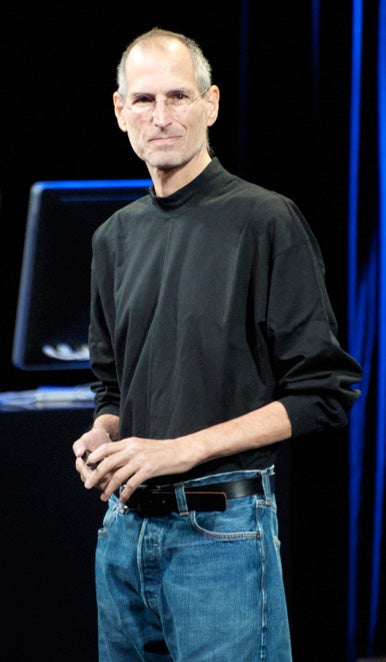
Tim Cook named as new CEO; Jobs elected Chairman of the Board
After 14 years as Apple's CEO, Steve Jobs resigned his post on Wednesday and was replaced by Tim Cook, who previously was the company's Chief Operating Officer. Jobs, in turn, was elected as chairman of Apple's board of directors.
"I have always said if there ever came a day when I could no longer meet my duties and expectations as Apple’s CEO, I would be the first to let you know. Unfortunately, that day has come," Jobs said in a letter addressed "to the Apple Board of Directors and the Apple Community."
"I believe Apple’s brightest and most innovative days are ahead of it. And I look forward to watching and contributing to its success in a new role," Jobs wrote. "I have made some of the best friends of my life at Apple, and I thank you all for the many years of being able to work alongside you."
"In his new role as Chairman of the Board, Steve will continue to serve Apple with his unique insights, creativity and inspiration," board member and Genentech chairman Art Levinson said in an Apple press release. “Steve’s extraordinary vision and leadership saved Apple and guided it to its position as the world’s most innovative and valuable technology company. Steve has made countless contributions to Apple’s success, and he has attracted and inspired Apple’s immensely creative employees and world class executive team."
Jobs had been on a medical leave of absence since January 2011. He continued to hold the CEO title while Cook oversaw the day-to-day operations of the company. At the time, Jobs told Apple employees he was taking a leave from his day-to-day duties to “focus on my health.”
“I’m obviously concerned for Steve,” analyst Tim Bajarin of Creative Strategies told Macworld. “It’s logical to believe that something’s related to his health.” Bajarin was quick to point out, however, that “he’s still chairman... he’s saying he can’t handle the role of CEO.”
“While I am concerned about Steve personally, I am not concerned about Apple,” Bajarin said. “You’ve got a very deep bench of managers and executives who know how Jobs thinks, feels, and his vision.”
Gartner analyst Michael Gartenberg echoed those sentiments, noting that “while this marks the end of an era for Apple, it’s important to remember the there’s more to Apple than any one person, even Steve Jobs. Continuing as chairman Mr. Jobs will continue to leave his mark on both the company and products even as he transfers the reigns to Mr. Cook.”
Jobs is "an icon and what he's done with Apple is something probably unprecedented in business," said IDC analyst Al Hilwa. "It will be a case study in business school books for decades."
Despite his leave of absence from the company, Jobs had remained involved with Apple’s long-term efforts. He appeared at June’s Worldwide Developers Conference keynote, handling presentation duties for the section on Apple’s upcoming iCloud service. Jobs also made a surprise appearance at Apple’s iPad 2 press event in March.
Two stints at Apple
Jobs co-founded Apple in 1976, along with Steve Wozniak and Ron Wayne. With Wozniak, he helped develop the Apple I and Apple II, and, in 1984, introduced the Macintosh to the world. However, he clashed with the company’s CEO, John Sculley, in 1985 and left to found a new company, Next Computer. He also acquired animation company Pixar from filmmaker George Lucas in 1986, later selling it to Disney and becoming a member of the media conglomerate’s board of directors, as well as its largest individual shareholder.
In 1997, Apple acquired Next and Jobs returned to the company to take up the CEO mantle. While Jobs initially served in an interim CEO capacity, replacing ousted chief executive Gil Amelio, he moved into the top role for good in 2000.
During his time at the helm, Apple released a number of groundbreaking products, including the iPod in 2001, the iPhone in 2007, and the iPad in 2010. Jobs also presided over a revitalization of the company’s Mac line: Apple introduced its iMac desktop computer in 1998, shortly after his return. Jobs’s return also heralded the end of a pair of prominent but controversial projects, including the licensing of the Mac OS to third-party hardware companies, and the Newton personal digital assistant.
Among Jobs’s other accomplishments as CEO were the launch of the iTunes Music Store in 2003, which went on to become the top music retailer in the U.S. The store, combined with the iconic iPod, popularized the selling of digital music, and later expanded its content to include movies, television shows, podcasts, audiobooks, ebooks, and, of course, apps for Apple’s mobile iOS platform.
Over the course of his tenure, Apple saw unprecedented success, rising from the edge of its demise to become, by some measurements, the most valuable company in the world. That hasn’t always meant popular actions—when Jobs returned in 1997, it was with an influx of $150 million from Microsoft, then considered the company’s arch-rival. But a decade later, the company had become hugely profitable and, as of its most recent financial statements, now sits on a cash reserve of more than $76 billion.
Full text of Jobs's letter
To the Apple Board of Directors and the Apple Community:
I have always said if there ever came a day when I could no longer meet my duties and expectations as Apple’s CEO, I would be the first to let you know. Unfortunately, that day has come.
I hereby resign as CEO of Apple. I would like to serve, if the Board sees fit, as Chairman of the Board, director and Apple employee.
As far as my successor goes, I strongly recommend that we execute our succession plan and name Tim Cook as CEO of Apple.
I believe Apple’s brightest and most innovative days are ahead of it. And I look forward to watching and contributing to its success in a new role.
I have made some of the best friends of my life at Apple, and I thank you all for the many years of being able to work alongside you.
Steve
[Updated several times throughout the afternoon to add more information, quotes from analysts, and background on Jobs. Macworld editors Dan Moren and Serenity Caldwell and the IDG News Service's Nancy Gohring contributed to this story.]
Tuesday, August 16, 2011
God's attributes and acts prove that He can be trusted #2
God's acts point to His attributes
As we have seen in the case of the Creation event, when God spoke things into being, we can learn from the acts of God a little bit of what He is like. What can we learn from the very first verse of the Bible, and the very first event in time and space, about the nature of God? First, God exists. I know that seems simple, but, think about it. God can't create without existing, can he? He must also be powerful to be able to create. If God was there before the Creation event to plan it in the first place, then He is eternal, and not bound by time. He must also be pretty smart, brilliant, in fact, to have created all of the systems and sub-systems in the entire universe from the macro level to the micro and quantum level. As we mentioned before, we also find out that God is self-existent, that is, he doesn't need the universe He created to exist Himself, but rather it's the other way round. But we also see that he can act in and upon the creation He made. So on a short little look at the very first few words of the Bible we can see that God is self-existent, eternal, really powerful (in fact, all powerful), quite knowledgeable (really, all-knowing), transcendent (over and above), and immanent (all through and within). So it is easy to see that God's acts recorded in history show us His attributes.
Monday, August 15, 2011
Rick Perry's speech in Waterloo, Iowa
The Right Scoop has video of Rick Perry's speech in Waterloo, Iowa last night.
You know what to do, right? Click and watch
http://www.therightscoop.com/full-speech-rick-perry-in-waterloo/
You know what to do, right? Click and watch
http://www.therightscoop.com/full-speech-rick-perry-in-waterloo/
Saturday, August 13, 2011
Perry Joins 2012 Race: "A Great Country Requires A Better Direction"
Perry Joins 2012 Race: "A Great Country Requires A Better Direction"
Link to the video on Real Clear Politics of Rick Perry's announcement as a candidate for the Republican nomination for the presidency in 2012! Click and watch it, click and watchers!
Link to the video on Real Clear Politics of Rick Perry's announcement as a candidate for the Republican nomination for the presidency in 2012! Click and watch it, click and watchers!
Tuesday, August 9, 2011
God's Attributes And Acts Prove That He Can Be Trusted #1 - God: the Prequel
God:the Prequel - before Creation, there was God
The book of Genesis begins with the words, "In the beginning God..." And in this phrase you have the very ultimate beginning of beginnings, the ultimate starting point. There actually was a zero point in the time-space continuum that was zero seconds, zero minutes, zero hours, and zero days. And then, bang!, the clock began ticking. History began. The possibility of all possibilities, life on planet earth, and everything else kicked off. And here is where you have the answer to all of those humorous reductio absurdum arguments. The ultimate cause of all causes began to cause causes. The scripture says that God spoke and then things began. The word that describes this awesome event in history is "creation-out-of-nothing", also known as creation ex nihilo. This is the declaration of God's intention as Creator.
One phrase to describe God is as "the Intentional One." In fact, God is the very embodiment of intentionality. In the book of Isaiah, God says of himself,"I am God, and there is none like Me, declaring the end from the beginning,..." (Isaiah 46:9&10). Did you catch that? In the business and manufacturing world they call this critical path analysis. This is a process of planning from the result back to the cause or project purpose. For example, an architect imagines a unique building, draws up the final idea, and then works backward to the point of ground breaking on the project. This is exactly how God planned life, the universe , and everything.
There is a hint or two in the Bible that God did things and planned things even before the creation. There are scriptures that say that God intended to do things like redeem and save people, "before time began" or before the foundations of the world."
So as in the the above example of God declaring the end from the beginning, there is the statement of David,"Your eyes saw my substance, being yet unformed. And in Your book they all were written, the days fashioned for me, when as yet there were none of them." This implies a deliberate plan on the part of God to create the unique person named David who was a shepherd boy and became a KIng. It is said of Jesus that "He is before all things, and in Him all things consist, "(Col.1:17) and "He indeed was foreordained before the foundation of the world, but was manifest in these last times for you."(1Pet. 1:20) And while these scriptures speak of several things, in this case they speak of a God that was, and is, separate and apart from His creation, and exists outside and within it. I once heard a preacher say, when speaking off the cuff about the Big Bang, that before there was anything, there was nothing and that then "God spoke and Bang!, it happened!" So God was there before the worlds began. In the beginning there was God.
Facebook Funnies: The Obama/Oprah Challenge

Obama looked at Oprah, chuckled & said, "You know, I could throw a $1,000 bill out of the window right now & make somebody very happy." Oprah shrugged her shoulders & replied, "I could throw ten $100 bills out of the window & make ten people very happy". Hearing their exchange, the pilot of the plane said to his co-pilot," Such big-shots back there. I could throw both of them out of the window & make 256 million people very happy."!!

Monday, August 8, 2011
Kingdom Quotes: Rick Perry Prays To God For America

"Lord, You are the source of every good thing, You are our only hope. And we stand before You today in awe of your power, and in gratitude for Your blessings; in humility for our sins.
“Father, our heart breaks for America. We see discord at home. We see fear in the marketplace. We see anger in the halls of government. And as a nation we have forgotten Who made us, Who protects us, Who blesses us, and for that we cry out for Your forgiveness.
“We pray for our nation’s leaders, Lord—for parents, for pastors, for the generals, for governors—that You would inspire them in these difficult times. Father, we pray for our president, that You would impart Your wisdom upon him, that You would guard his family. We pray for our military and the families who love them. Father, especially for those special operators who lost their life yesterday in defending our freedoms.
"You call us to repent, Lord, and this day is our response. We give it all to You. For Thine is the kingdom and the power and the glory, forever. Amen and amen."
Texas Governor Rick Perry at The Response prayer gathering, August 6, 2011
Thursday, August 4, 2011

Wednesday, August 3, 2011
We Are All On A Journey #5 - Enemy Encounters

On your way, you may encounter an enemy or two
As was previously mentioned in the section on Jesus' views of things, there is a real battle going on out there for the control of the minds and hearts of mankind. The forces of darkness are always looking to gain a foothold on the thinking of us all. And sometimes we face enemies in forms that are not as easy to understand or clarify. The shades of gray are harder to see through than the black and white. It is important in these times to have a clear understanding of this warfare and to have an attitude that is at once fierce and loving.
In his book It's Your Call, author Gary Barkalow shares a great word picture that describes the necessary attitude you must have in order to do well on the journey:
"Let's imagine you've just stepped onto a cruise ship for the vacation of your dreams. Your expectations are high--you have picked the best rated cruise liner, the best destinations, the best weather possibilities, and you've paid a premium price. shortly after the cruise begins, the weather changes from cloudless skies and calm seas to wind, rain, and turbulent water. The changing conditions have taken some of your desired activities and freedoms away. You are now forced indoors for most of the time and are relying on the food and amenities to make up for what was taken from you. You are disappointed by the service, which seems unreasonably slow, and the food, which is not as hot and fresh as you expected. All of the other people, who are also seeking shelter from the weather, are invading your space--they are needy and too loud and too numerous. Even when you retreat to the sanctuary of your cabin, you can still hear their voices and their clunking around. You find yourself shouting (at least under your breath), "Why do things have to be like this; why do things have to be so hard;why can't you come through for me God--at least once?
Now let me simply change the setting of the story. You are boarding a ship, but it is not a vacation cruise liner; it is a battleship. You have dreamed of and worked hard for this day. Your expectations are high--to be in the company of other warriors playing a significant part in a great battle for the lives and freedom of others. It's crowded, but you are glad you are not alone and you know that you need other. The food isn't great, but it sustains you. Life fluctuates from boredom to intensity, but you know you are moving toward the objective. The conditions outside may be rough, but you hardly notice because you're focused on your role, your job, your contribution on the ship, and your preparation. You find yourself shouting (at least under your breath), "When do I get to do what I was trained to do; when do I engage the enemy."
Are you serving on a battleship, or are you expecting service and luxuries on a cruise ship?
With God on your side, you eventually get where you're going
In the book of Hebrews it is said that "faith is the substance of things hoped for, the evidence of things not seen." And then there follows a long list of people who served God throughout redemptive history. They had a sense of being part of a larger story than just their own lives. They were connected to one another and God by a supernatural thread called faith.
There are three general understandings of the term "faith" in the Bible. First is the record of the acts of God and His people and the general beliefs concerning them, which is informational, doctrinal faith. This is the faith "once for all delivered to the saints(Jude 3). Next is faith that is a supernaturally given gift, mentioned in the list of gifts God gives to people on a situational basis, when the need arises. And finally there is the faith that is a trust in and reliance upon another, particularly God.
This third kind of faith is what is necessary for us to reach forward and trust that God is with us in our adventures and exploits with God. Jesus is famous for saying "for assuredly, I say to you, if you have faith as a mustard seed, you will say to this mountain, ‘Move from here to there,’ and it will move; and nothing will be impossible for you(Matt 17:20)." He seemed to say that if we just had enough faith, we could do the same things that he did and more. “Most assuredly, I say to you, he who believes in Me, the works that I do he will do also; and greater works than these he will do, because I go to My Father. And whatever you ask in My name, that I will do, that the Father may be glorified in the Son. If you ask anything in My name, I will do it.(John 14:12-14) To embark upon the journey we are beginning, it takes all three kinds of faith.
Subscribe to:
Posts (Atom)